Hotel security officer guide: managing drunk and disorderly guests
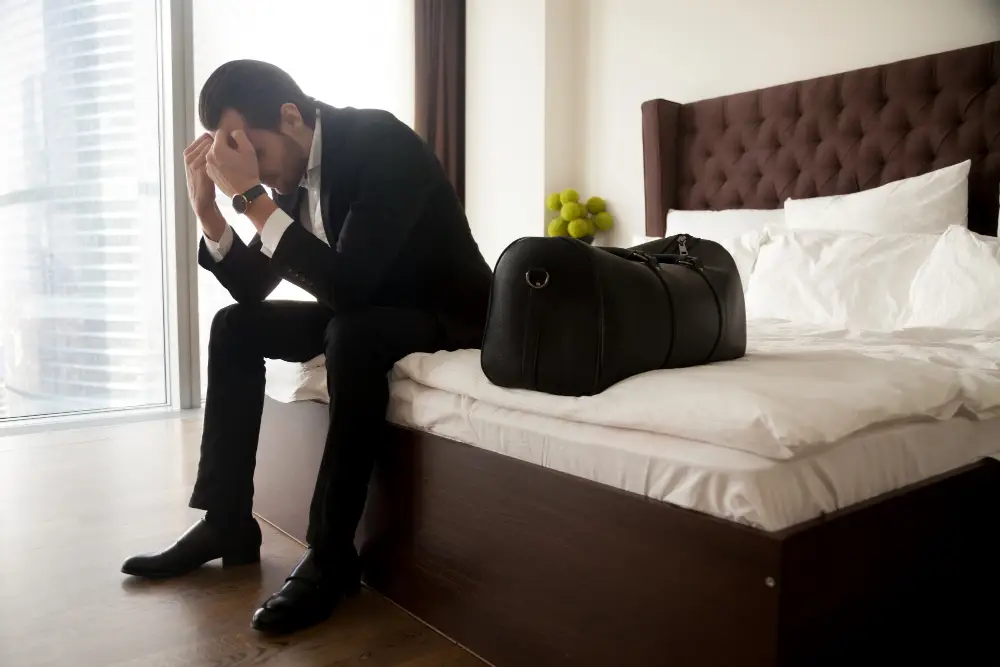
A practical guide for hotel security and night managers on dealing with intoxicated or disorderly guests while protecting other guests, staff and the hotel.
This article is general guidance and is not legal advice. Always follow your employer’s policy and your site’s assignment instructions.
A hotel is a business, a home for the night and, often, a bar and event venue all in one. Most guests arrive, relax and leave without any trouble. But parties in rooms, late-night drinking and arguments between guests are part of hotel life, and they usually happen when fewer staff are on duty.
Hotel security officers need to protect other guests and staff while treating every guest with respect, including the ones causing problems. This guide covers the law, a step-by-step response to disturbances, entering rooms, welfare and eviction.
This guide explains the law in England and Wales. Scotland and Northern Ireland have their own rules on arrest and detention, so check local guidance if you work there.
Key Takeaways
- Hotels have different risks from bars and clubs, because guests may have nowhere else to go.
- Always attend room disturbances in pairs and keep control informed.
- Give clear warnings before escalating, and let a duty manager decide on eviction.
- Only enter a guest room in line with policy, and always with a witness.
- Welfare and safeguarding concerns come before everything else.
What makes hotel security different
Hotel security officers face challenges that door supervisors in bars and clubs often do not:
- Guests have paid for a room and expect privacy.
- Removing a guest late at night can leave them with nowhere to go.
- Incidents happen behind closed doors, in rooms and corridors with limited CCTV.
- Staffing is often thin overnight, with one security officer and a night manager.
- The public mix is wide, including families, business travellers, wedding parties and stag groups.
The legal background
Under the Hotel Proprietors Act 1956, hotels generally have to accept travellers who are able and willing to pay and are in a fit state to be received. That means a hotel can usually refuse someone who is drunk or disorderly.
Hotels with bars, restaurants or event spaces also hold premises licences under the Licensing Act 2003. It is an offence to sell alcohol to someone who is drunk, and a drunk or disorderly person who refuses to leave licensed premises when asked commits an offence. The hotel’s terms and conditions, which guests accept when booking, usually set out rules on behaviour, noise, parties and the right to end a stay.
A guest has a licence to occupy the room, not a tenancy, so the hotel can end the stay under its terms and conditions and ask the guest to leave. That does not give security staff any special powers. Any force used must be justified as reasonable under the common law or section 3 of the Criminal Law Act 1967, which is why the guidance below is to call the police rather than remove a guest physically unless someone is in immediate danger.
Want to do this job legally and safely?
The SIA Door Supervisor course covers arrest powers, conflict management and physical intervention.
Common incidents in hotels
| Incident | Typical risk | First response |
|---|---|---|
| Noisy room party | Complaints, damage, escalation | Attend in pairs, polite warning |
| Drunk guest in public areas | Falls, arguments, vulnerability | Welfare check, guide to room |
| Aggression towards staff | Assault, staff distress | De-escalate, support staff, call police if needed |
| Non-residents on guest floors | Theft, antisocial behaviour, exploitation | Challenge, check booking, escort out |
| Damage to rooms | Cost, safety hazards | Record, photograph, inform manager |
| Domestic disputes | Violence, safeguarding | Attend, separate if safe, call police |
Step-by-step: responding to a room disturbance
1. Gather information
Find out who complained, which room, what they heard, and how long it has been going on. Check the booking: how many guests, whose name, and any notes from check-in.
2. Plan and inform
Tell the duty manager and let control or reception know where you are going. Attend with a colleague. Switch on body-worn video if your hotel uses it, and tell the guest it is recording.
3. Knock and identify
Knock firmly, wait, and say who you are. Stand to the side of the door rather than directly in front of it.
4. Explain calmly
Speak politely and explain the issue: “Sorry to disturb you. We’ve had a complaint about noise from this room. Could you please keep it down so other guests can sleep?”
5. Check the room count
If there appear to be more people than booked, remind the guest of the hotel’s rules and ask any non-residents to leave.
6. Follow up
Return or check CCTV in the corridor after a short time. If the problem continues, give a clear final warning and explain the consequences, such as ending the stay.
7. Escalate
If the behaviour does not stop, the duty manager decides whether to end the stay. If guests become violent, threatening, or refuse to leave after their stay has been ended, call the police.
8. Record
Log times, names, room number, what was said, warnings given and outcomes. If body-worn video was used, note the clip reference. Good records protect the hotel if the guest complains or disputes a charge.
Body-worn video and CCTV footage are personal data under UK GDPR, so keep only the clips needed for an incident and follow the hotel’s retention policy.
Entering guest rooms
Guests expect privacy, so entering a room without permission must be justified and follow hotel policy. Situations that usually justify entry include:
- a genuine concern for someone’s welfare, such as no response after a fall was heard;
- a fire alarm activation or smell of smoke;
- a flood or other emergency affecting the room;
- a police request.
Knock, announce yourself clearly and wait before entering. Always have a witness, ideally the duty manager, and record the reason, time and what you found.
Want to work in hotel security?
The SIA Door Supervisor course covers de-escalation, physical intervention and licensing law, with Emergency First Aid on day one. Courses start from £330.
Centres include Stratford, Aldgate and Bethnal Green.
Handling a very drunk guest
A guest who is very drunk may be at risk of falls, choking on vomit or being taken advantage of. Good practice includes:
- checking whether they are staying at the hotel and helping them to their room;
- checking they are not alone if they seem very unwell;
- placing someone who is unresponsive but breathing in the recovery position and calling 999;
- stopping further alcohol service in the bar;
- recording welfare checks and their times;
- considering spiking if a guest is confused or unsteady after very little alcohol. Do not leave them alone in a room. Get first aid, call 999 if symptoms are serious, and follow the spiking guidance in our venues guide.
De-escalation in a hotel setting
The same conflict management skills used by door supervisors apply in hotels. Stay calm, keep a safe distance, listen, and offer choices. Try to move conversations away from public areas such as the lobby or bar, while staying within CCTV coverage. Remember that the guest may be embarrassed in front of their group, and giving them a way to back down with dignity often works best.
Ending a stay and removing a guest
Evicting a guest is a serious step and should always be a manager’s decision. Before removal, consider:
- whether a final warning has been given and recorded;
- whether the guest has somewhere safe to go;
- whether children or vulnerable people in the room would be affected;
- how refunds and belongings will be handled;
- whether police attendance is needed.
Allow the guest time to collect their belongings, supervised if necessary. If they refuse to leave, call the police rather than using force, unless there is an immediate risk to someone’s safety.
Safeguarding in hotels
Police forces run Operation Makesafe to help hotels spot child sexual exploitation, and many local authorities include it in licensing conditions. The same warning signs apply to modern slavery and to adults being controlled or exploited. Hotels can be used by people who exploit children and vulnerable adults. Security officers are well placed to notice warning signs, such as:
- young people arriving with older adults who are not their family;
- multiple visitors to one room over a short period;
- guests paying in cash and refusing housekeeping;
- someone who seems frightened, confused or controlled by another person.
Report concerns immediately to the duty manager and, if a person may be at risk of harm, call the police on 999. Do not confront suspected offenders yourself.
Preventing problems before they start
- Make house rules clear at booking and check-in.
- Watch for bookings that suggest room parties, such as local addresses for one-night stays.
- Use key card controls on lifts and guest floors.
- Patrol corridors regularly, especially after the bar closes.
- Share information about problem bookings between shifts.
Managing a hotel or a night team? Ask us about group bookings for Door Supervisor and first aid training.
How to become a hotel security officer
Hotel security offers steady shifts, a professional setting and a clear path into night manager and security manager roles. Employers usually ask for:
- an SIA Door Supervisor licence. Contracted officers must hold one, and in hotels with licensed bars or event spaces even in-house staff carrying out door supervisor duties need it. A Door Supervisor licence also covers security guarding work
- an Emergency First Aid certificate, which the SIA requires for Door Supervisor and Security Guard training (our courses include it)
- customer service experience and clear written reports
- a CCTV licence for hotels with a control room
Every Door Supervisor course we list includes Emergency First Aid on day one, so you only need one booking.
Work in hotel and hospitality security
The SIA Door Supervisor course covers conflict management, licensing law and physical intervention, at centres across London and in Birmingham, Liverpool and Manchester.